Pfizer Medical Information
Findability, IA, and search for a global drug-information site
Doctors and patients use this site to look up Pfizer medications. The old experience was outdated, hard to scan, and frustrating for both audiences. Drugs were difficult to find. Each drug page was poorly structured. Search results were hard to parse.I led the visual design and worked through the UX from discovery through high-fidelity UI, as part of an FFW team in collaboration with Pfizer. Kickoff was fall 2019, including three days of on-site workshops at Pfizer’s NYC headquarters.
The problem
The repository had the content. The IA and UX did not. People could not reliably get from “I need information on this drug” to a clear, trustworthy page. That failure mattered more because the audience includes clinicians making real decisions, not only casual browsers.
My role
- Partnered with Pfizer on business goals, personas, and journeys in workshop
- Helped restructure how drugs are found and how each drug page is organized
- Designed high-fidelity wireframes through final UI comps
- Designed for legal and language constraints, not only for look-and-feel
Constraints that shaped the work
- Legal, by country. What can appear—and in search—changes by market. In some cases results can only show if the query matches exact keywords.
- Translation. The UI had to hold up when content expanded into dozens of languages.
- Two audiences. HCPs and patients needed the same system to feel clear, not dumbed-down or cryptic.
Those rules were the design problem. A prettier skin on the old IA would not have been enough.
What we changed
Content model. We treated drug findability and page structure first. Each medication page needed a predictable hierarchy so people were not hunting through a dump of information.
Search. We redesigned the engine and results so matches were easier to scan and understand—within the legal limits on what could be shown.
Key templates. New HCP home, drug landing page, medication listing, and search results. Those four views carry most of the experience.
The outcome
The redesigned site shipped but this design is no longer live. I can’t share internal performance numbers, but the goal was straightforward: make Pfizer’s medical information findable, structured, and usable across countries and languages.
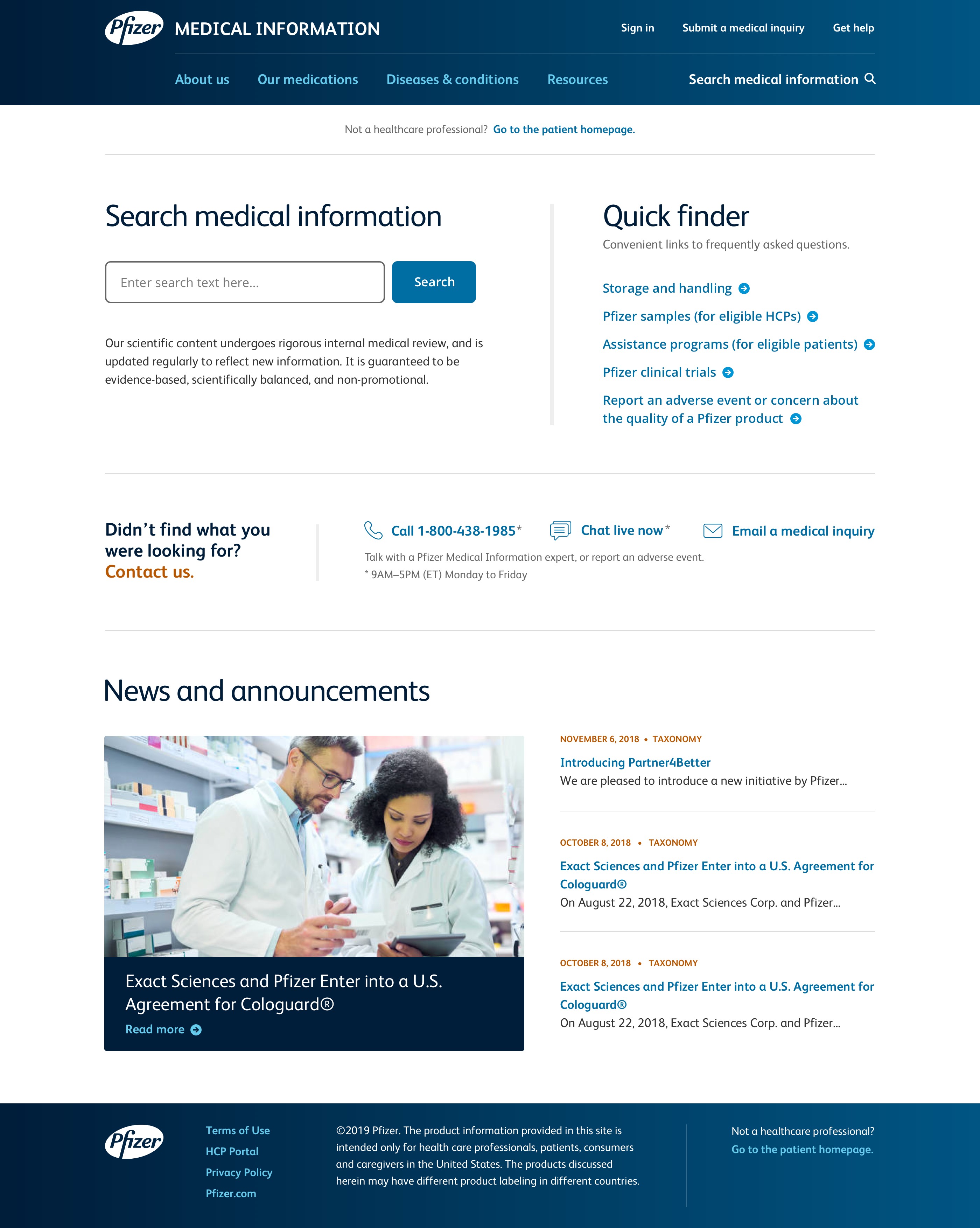
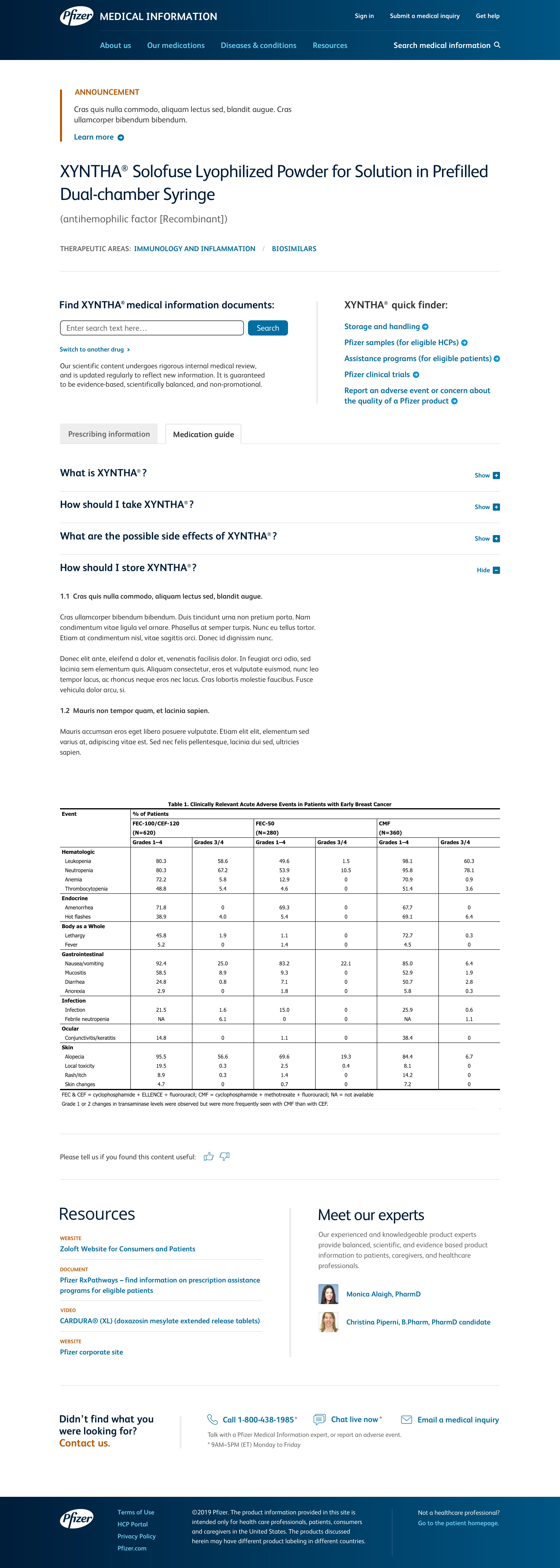
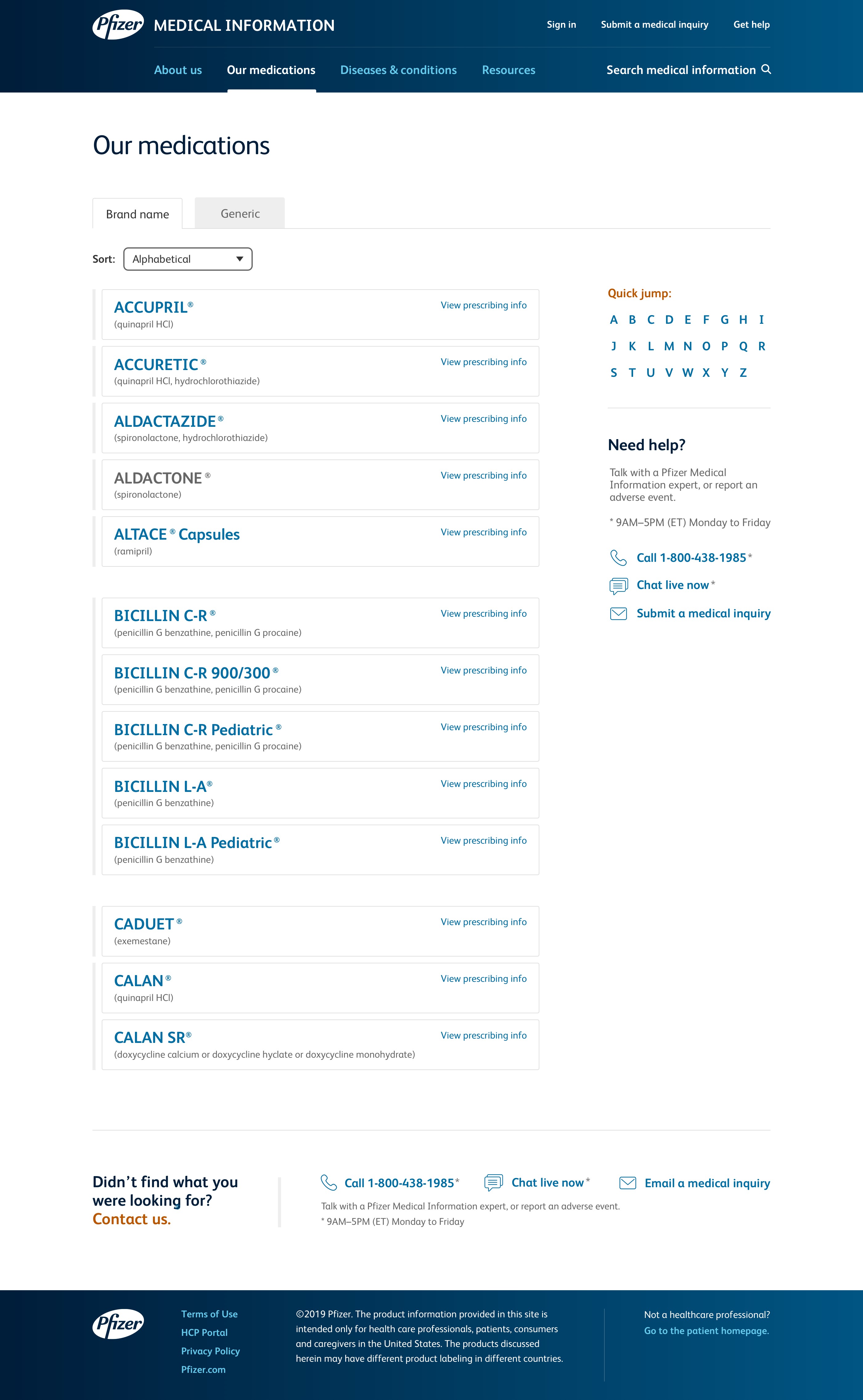
After: listing and drug pages use a clearer structure so the drug, not the chrome, comes first.
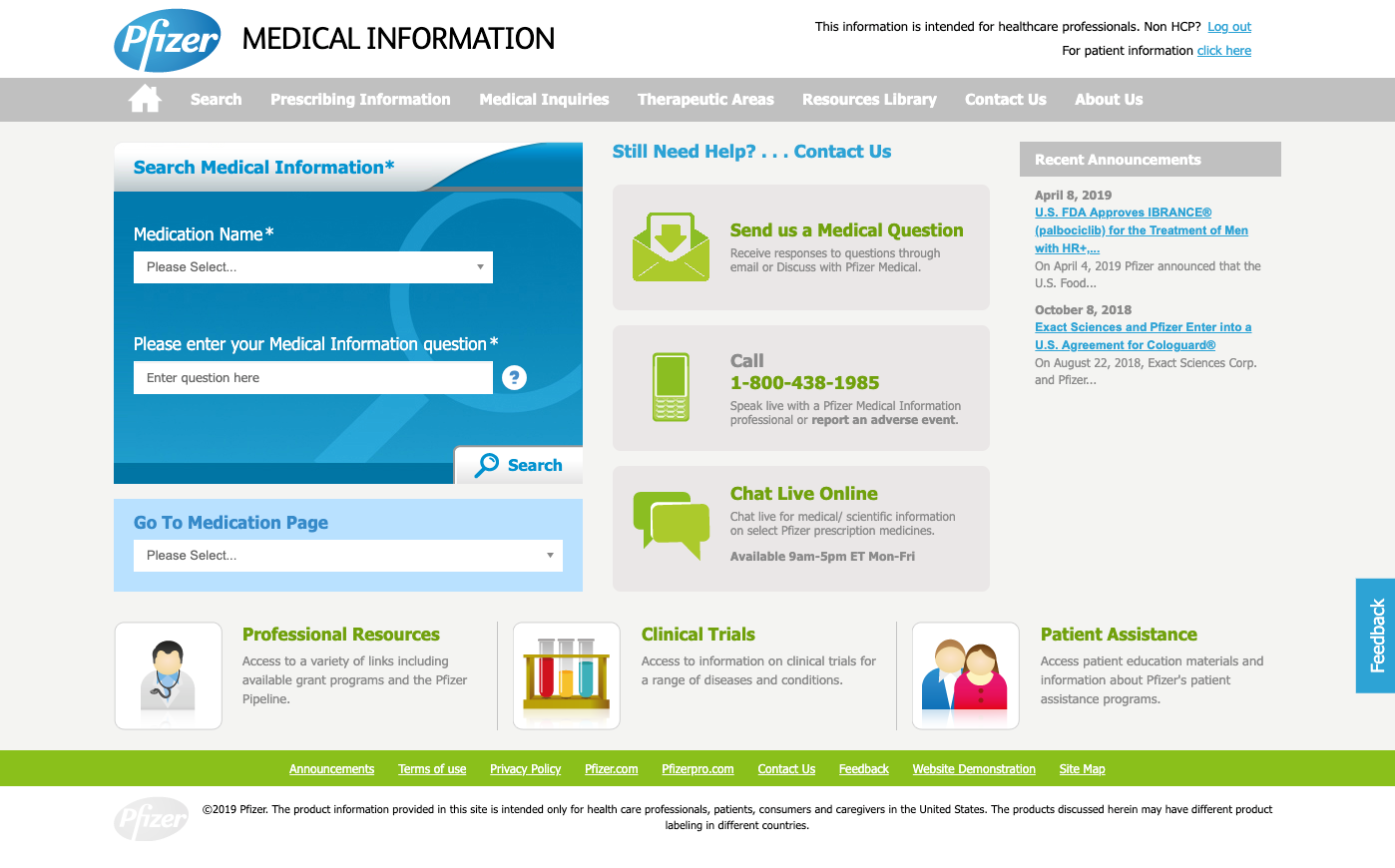
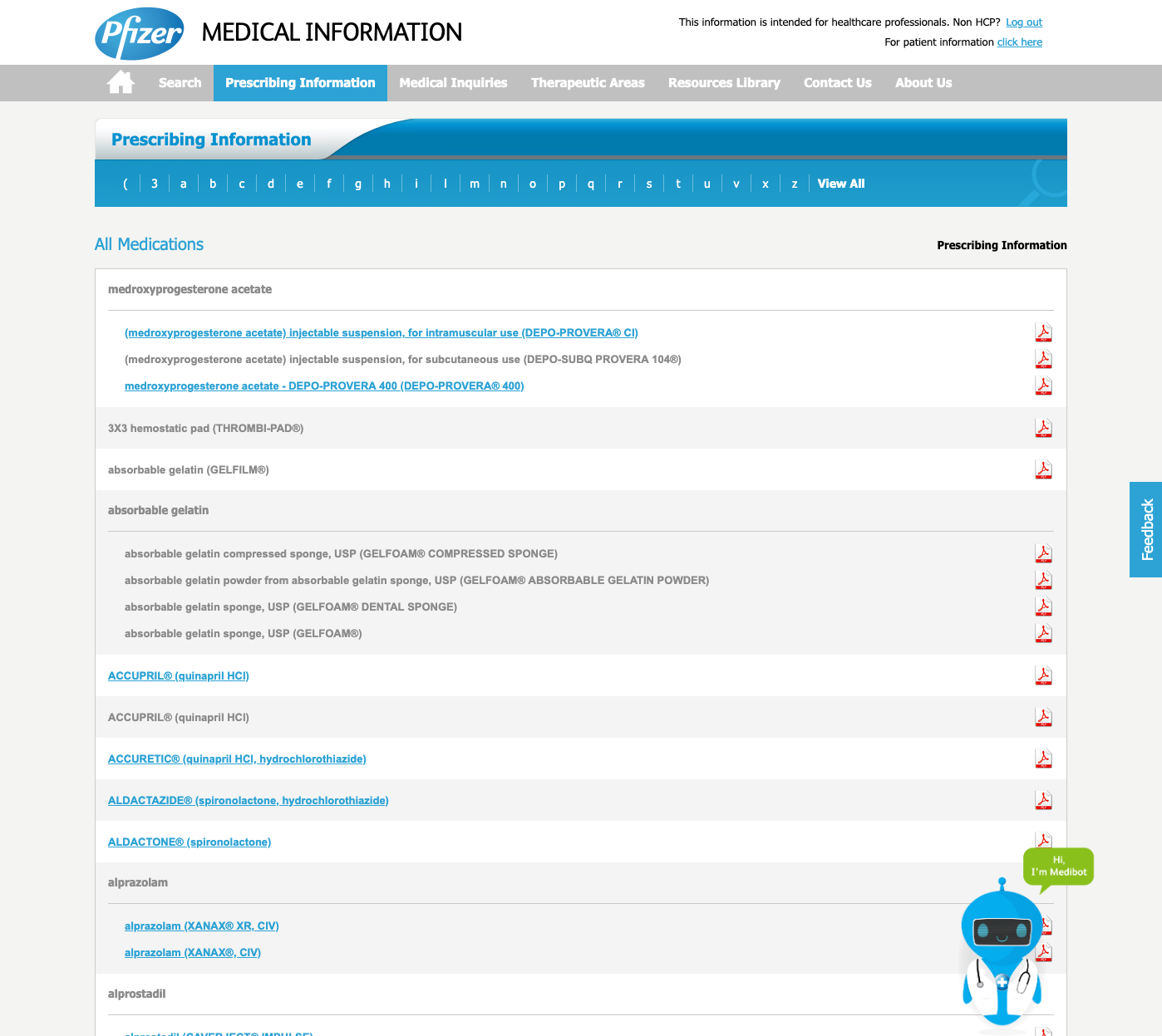
Before: home and listing made the catalog feel dated and hard to scan.
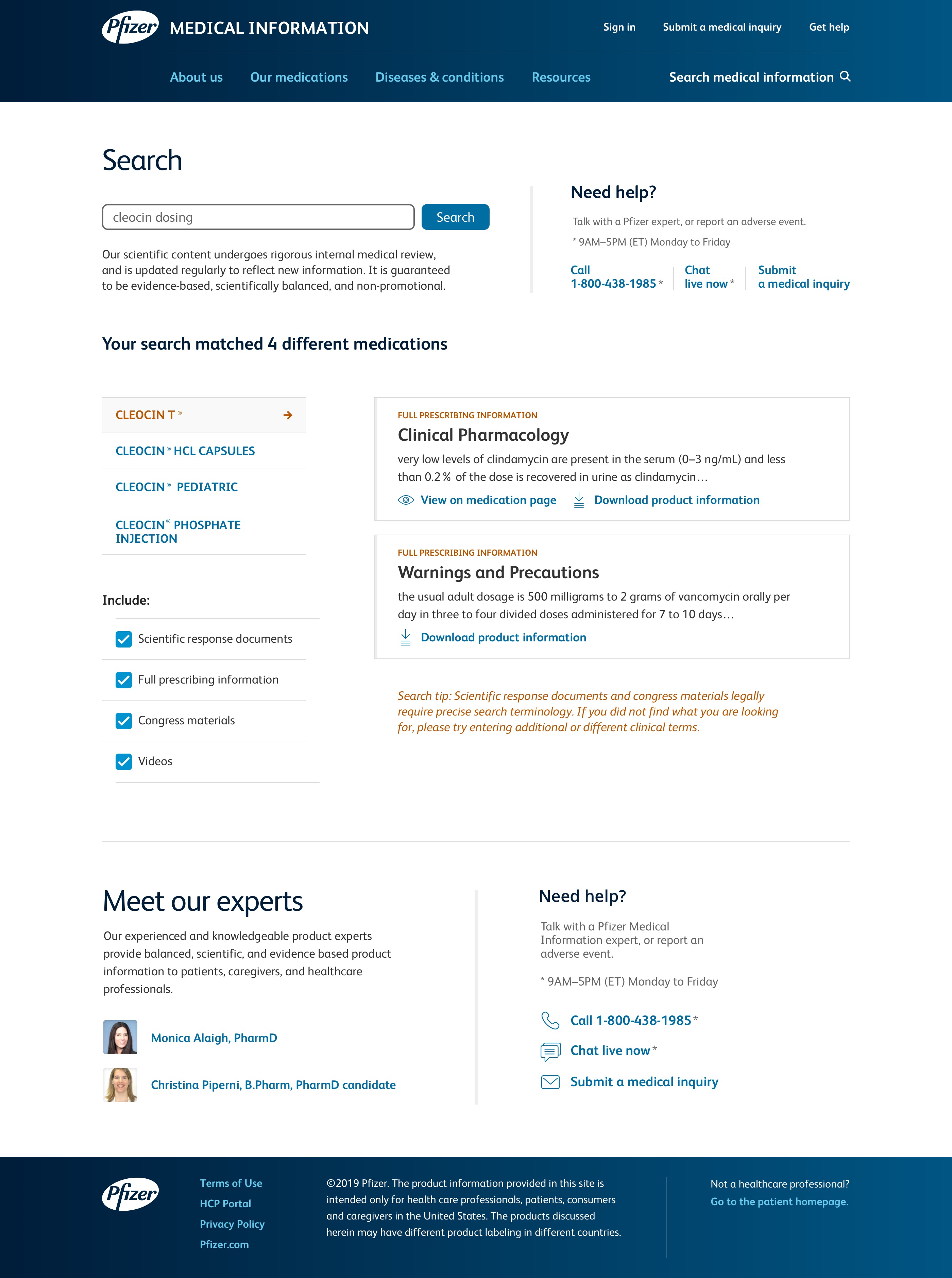
Search: results redesigned for scanning under strict keyword/legal rules.